DayDream Media
The smell of stale urine gently brushed against my mustache and made its way up through my nostrils to reach the front and center portion of my skull, inducing a very mild and brief headache, similar to a pinch. It wasn’t something that didn’t bother me as much as it did in my younger years. Immunity and familiarity began to set in as age became prominent in my life. Distant memories and occasional flashbacks played through my mind like slideshows of still images reminding me of the wild times. Traveling east on Ross Ave wasn’t covered in traffic on this hectic Tuesday. I was a little surprised yet grateful because the traffic on I-35 kept me behind schedule. After I gave notice of my tardiness, my cruise through Downtown Dallas came to a smooth stop before I took a right turn into an expensive parking lot. Life is a little better so paying for the parking space didn’t rattle in that moment.
Prior to meeting up with DayDream Media filmmaker and founder Kais Marz for the first time, I viewed a handful of his visuals on his Youtube channel. Music videos of today are constantly evolving, nonetheless, viewers constantly tune in to the latest video from their favorite artists. Music videos are equivalent to having a resume, and for a lot of fans, Youtube is one of the primary sources to search for new artists. The current generation of music video production is far more independent and creative than the last. Current music videos look a lot like short films rather than music videos containing several performance shots and a few b- roll clips. When I viewed Kais’ visuals, I felt the true independent spirit from scene to scene. I was able to notice a bit of Tarantino's influence through his work; as a huge Tarantino fan, I became more intrigued. Shortly after that time, I was hooked. I applaud the color grade in the majority of Kais’ visuals, satisfied with the vibrance and how the blues pop. There are a couple of recent videos, Lil Koon’s Crazy and Courtney Noir’s Down, that have become instant favorites. The cinematography and the storyline behind those two visuals serve as music visual eye candy. From shot to shot, various cinematic angles and the overall flow of each scene keep viewers engaged throughout the video. After watching several videos, it was imperative for me to find out more about the man behind the camera.
After spending a bit of time in Downtown Dallas for our photoshoot, stomachs began to rumble. That gave the signal that it was time to end the photo session and head over to Deep Ellum to begin our quest for food. We decided to stop by Deep Sushi and grub on a variety of sushi. It’s been years since I have last occupied the restaurant. The last time I was in Deep Sushi, my dietary lifestyle was a bit different. Ending up back in Deep Sushi was a bit of a challenge but my worries quickly diminished when I found something suitable and delicious. A little over 45 minutes went by and our bellies were full enough to call it quits. Our friendly waiter gave us our check, we paid and proceeded to leave the restaurant. We decided to walk around the block and have a chit chat about him, his upbringing, and the origins of DayDream
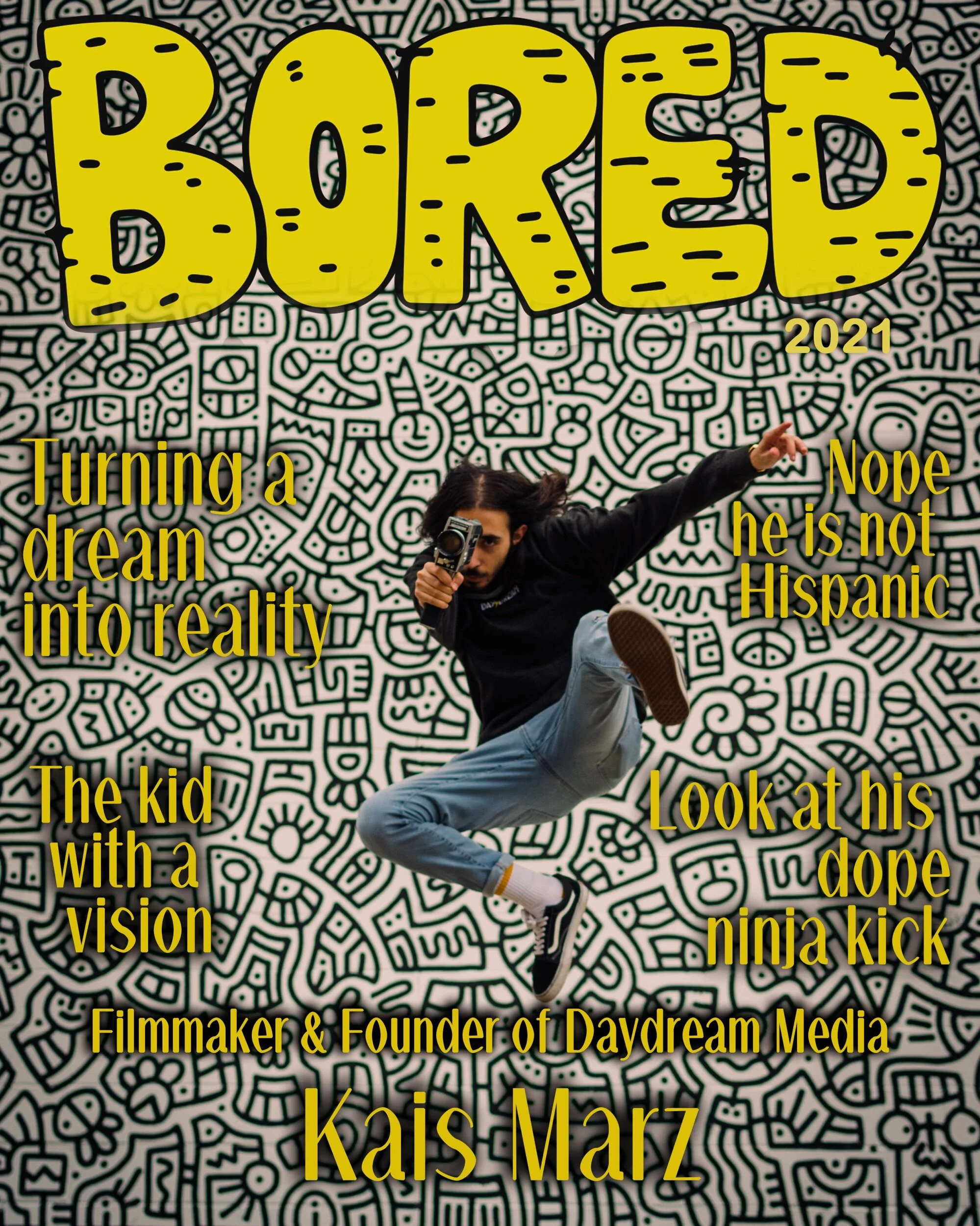
Contrary to my prior assumption, Kais Marz is not Hispanic nor is he of any Hispanic origin. Kais’s parents are from Jordan, southwest of Iraq. His father came to America in the ’80s during his college years. He was constantly going back and forth between America and Jordan, eventually obtaining citizenship. He met his wife during his frequent visits to Jordan, eventually getting married and moved back to America. According to Kais, his parents never seemed to stay put. They continued to constantly go back and forth. Kais was born in Jordan but at the age of one, they moved him to America. After his brief stay in Irving, Texas, Kais and his four siblings moved to California at the age of 6, moved back to Irving at the age of 12, and has not moved back since. From there he met his good friends, Carson and Rusty, and other childhood friends at Travis Middle School. According to Kais, he describes his former adolescent self as an energetic class clown with “undiagnosed ADHD” ( later on, in his senior year, he was diagnosed of ADHD). He wasn’t the biggest fan of school. If he wasn’t getting into trouble, he would spend time daydreaming about other things, drawing or writing rap lyrics, anything that wasn’t school-related.
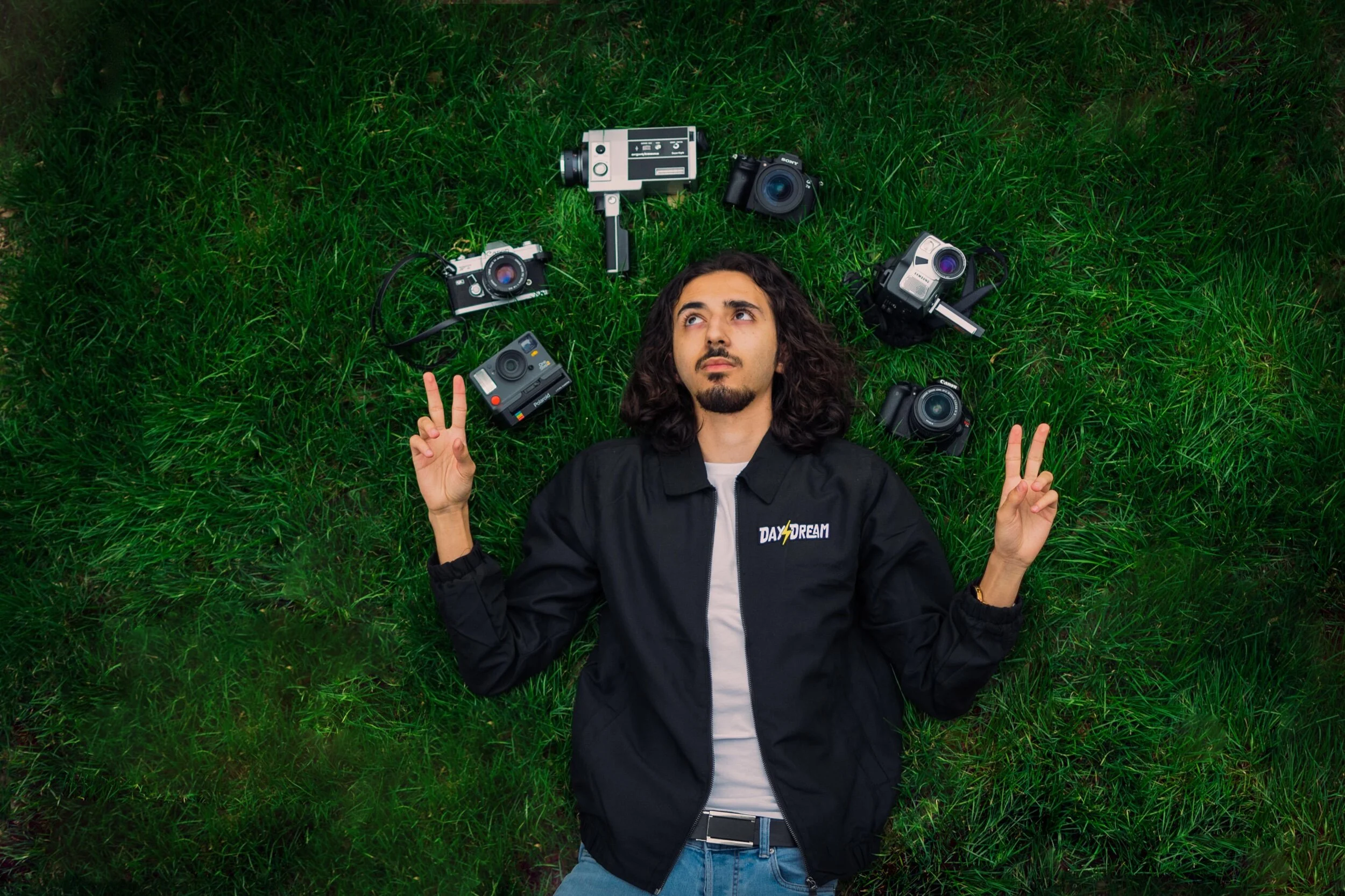
Filming something, or recording a video was the main thing was on Kais’ mind. That is where his spark of creativity began to blossom. Aside from recording video clips on an inexpensive, used Samsung Galaxy phone, the first professional camera Kais acquired was the Canon T3I. From there forward, he began on his journey of filmmaking. Kais inadvertently had a schedule placed in front of him; every Friday when the school released the kids into the weekend, that meant non-stop involvement in filmmaking until Sunday evening. The sudden burst of ambulance sirens filled the air and sliced through our conversation but it did not stop Kais from making it clear that he received no help in purchasing all of his camera equipment. There was a bit of pride present in his voice and he added that there were all necessary investments. It was extremely difficult to oppose that statement considering my knowledge of the cost of modern camera equipment. Through the course of middle school and high school, before DayDream Media came into existence, Kais, Rusty, and Carson spent their entire weekend exploring their creativity behind the camera lens and their youthful imagination. Kais mentions another friend he met in middle school, Ben, who is currently in the Navy stationed in California. He credits Ben for introducing him to the basic functionality and the technical aspect of the camera. The knowledge that Ben was feeding Kais was the last lightning bolt that birthed Frankenstein, it awakened the energetic beast inside Kais and he took off. He was given an inch and he ran the mile. After a little while of getting the hang of things, Kais created a YouTube channel of his work and named the channel “Prolix”, which was later deleted and revamped again. After Prolix, he created another channel called Marz Comedy that contained his skits, but after realizing his niche in short films and documentaries, he changed the name to Marz Films, which is still on Youtube today.
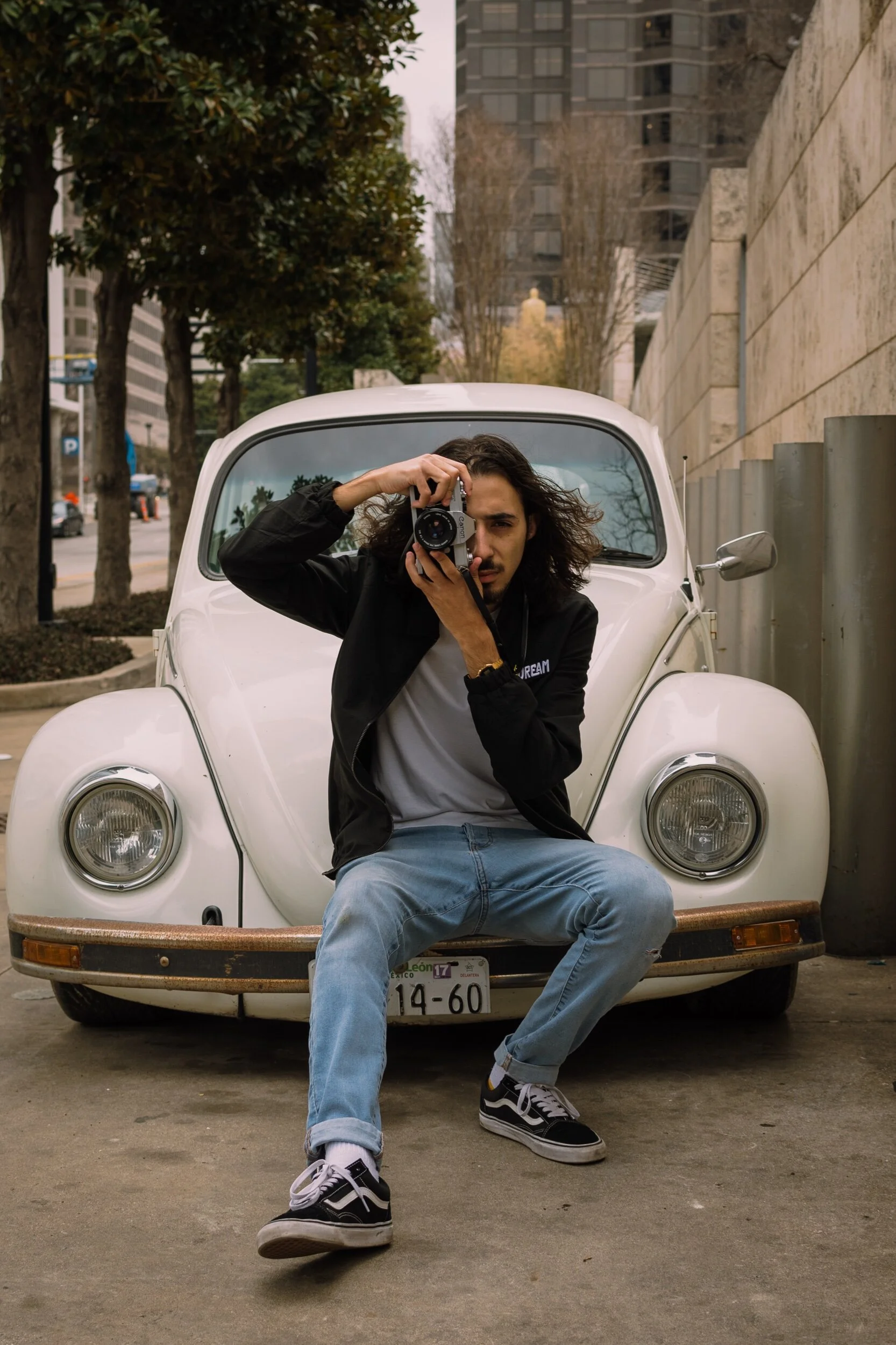
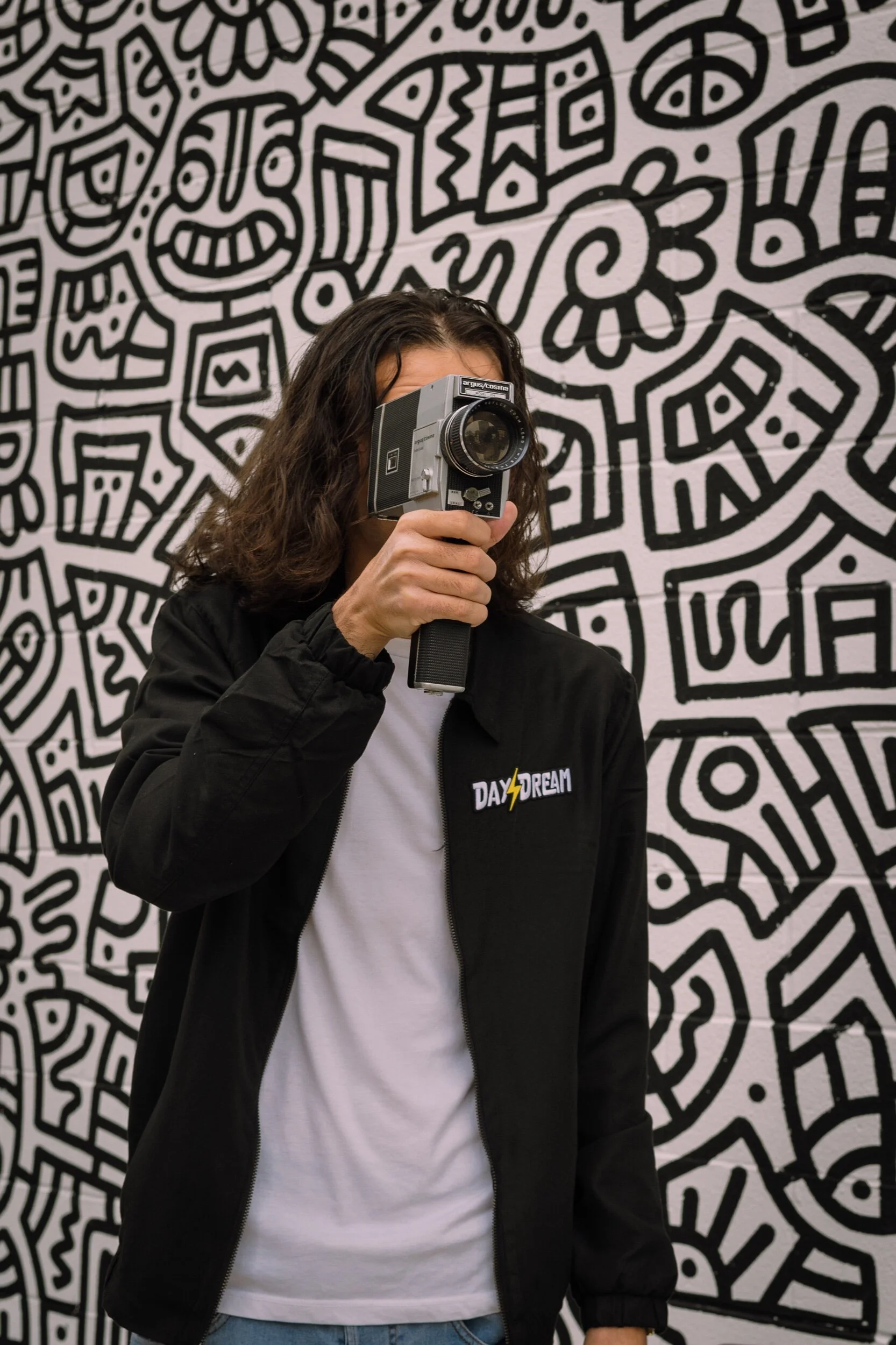
Kais and his team transitioned into shooting music videos for local artists. One day as Kais was amongst his team and other individuals who were either artists or musicians of some sort, he wondered why there wasn’t a platform available for a wide variety of local musicians. When he brought that to everyone else’s attention, they participated in a group discussion on building a platform that consists of music videos, skits, “A Day in the Life of…” segments, behind the scene footage, and more. Primarily, the meaning of DayDream is in connection to his youth, dealing with his ADHD and how his mind wanders away in a train of thoughts at times. He expresses to Bored that his best work is the product of daydreaming episodes. As any other young creative would love, he talks about turning DayDream into his main source of income. “ All of the homies have day jobs, and we’re just artists on the side”, he states, “so what if we turn out day jobs into daydreams and just do whatever the hell we want, what really matters.” This first video shot under DayDream Media was a video for Ben. Ben just released an album and he didn’t have the creative spark to promote it, causing Kais to step in as the creative director, which he later named the project HeadRush. He shot the first video on his dad’s old Panasonic camera at Carson’s house, it was an easy location with easy access that is still being used today. The first client video under the DayDream name was for an artist named Dev, he describes the video as dark and gloomy and also mentions that the first BTS video was shot with this video. Kais began to keep a little book that contains notes of everything that had anything to do with DayDream: the beginning thought process, every video ever recorded, the specific color of yellow, the specific font, every intricate detail is in that book.
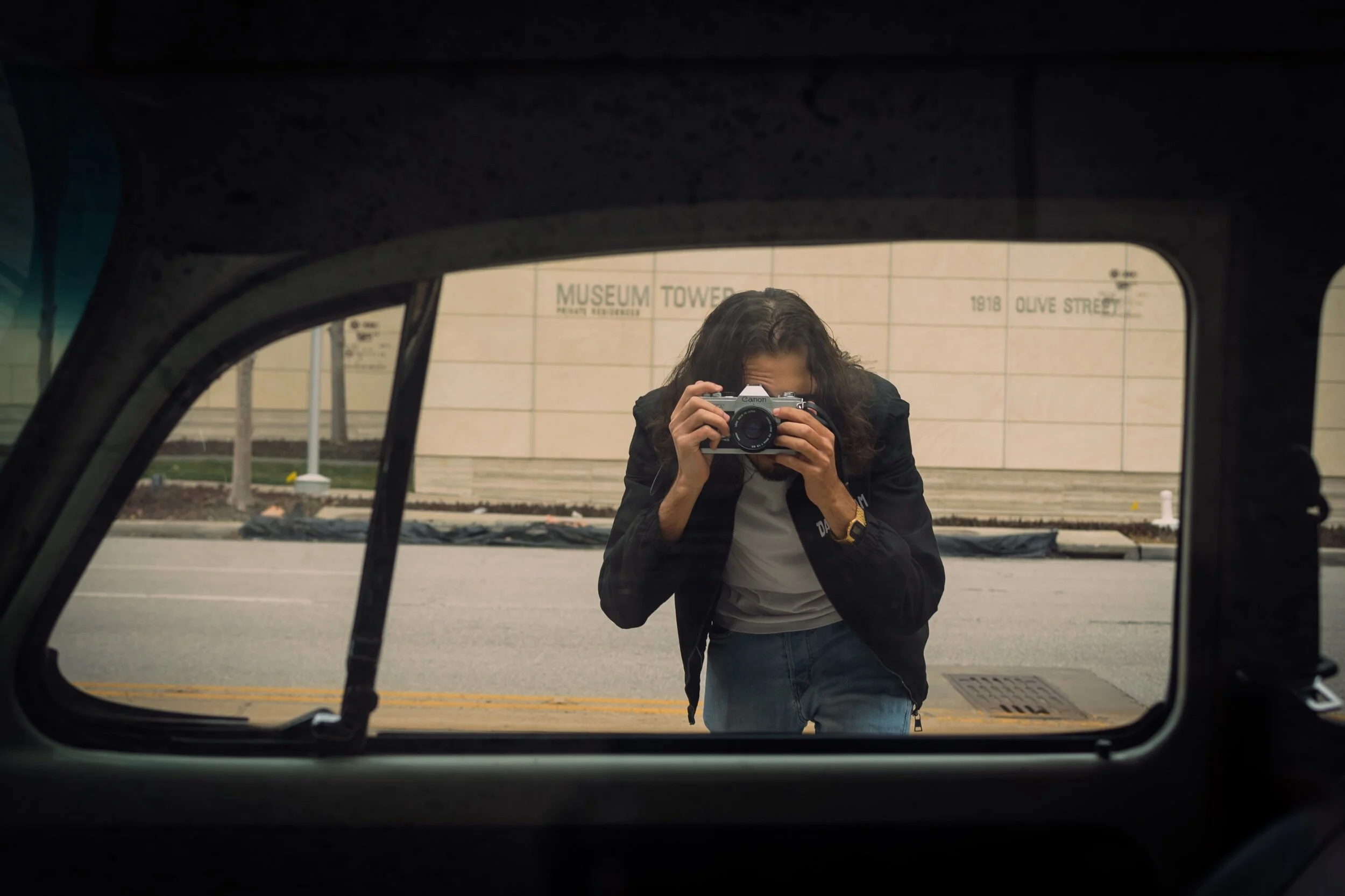
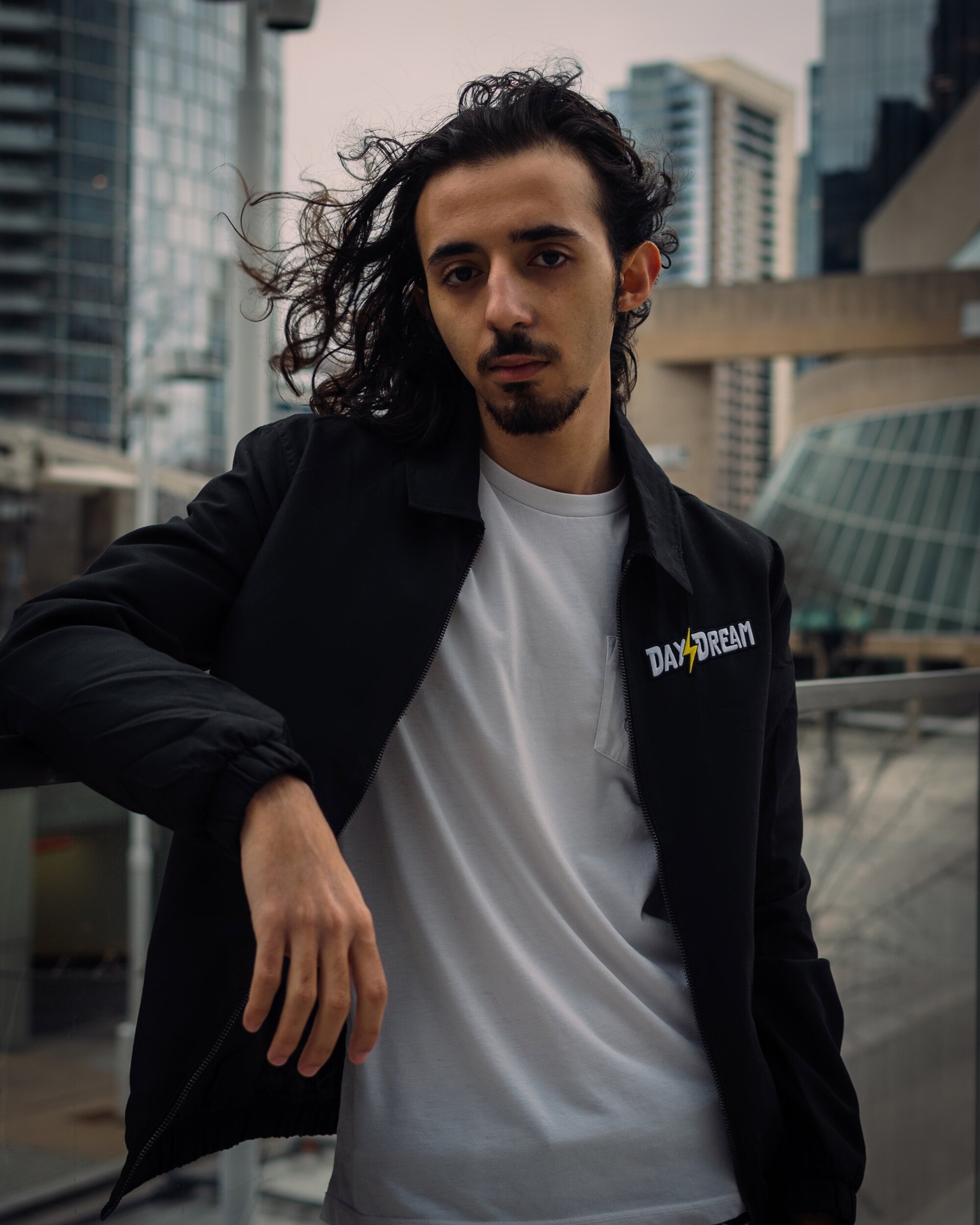
For the most part, Kais has been fortunate enough to deal with artists who are as creative as possible to make the best out of the end result. On the occasion, there will be an artist that will just show up to the shoot and stand there. The main challenge for Kais is properly communicating to the artist and instructing them in a way that both parties understand. Sitting down with the artist over coffee or brunch and getting to know that artist proves to be very effective in aiding the process of the film. What he found with a lot of artists is that some don’t do well when there is a crowd around them while filming, as if it becomes a theater. At times, Kais will have to tell everyone else involved in the shoot to exit the room while he films his subject. No matter how tedious the project becomes, Kais strives to have fun, no matter the circumstances. His challenging yet most favorite shoot to date was the visual for Lil Koon, Crazy. To Kais, the challenge for the film shoot was to give the movie an old Western look, in total contrast to the modern world we live in.
Early on in the genesis of DayDream, Kais gathered inspiration for Chicago-based media company Lyrical Lemonade. Similar in a few ways, what sets DayDream apart from other media companies is the consistency and personal customization that’s embedded in the visuals that enhances the visual on a deeper level. “ Everything from the lettering to the color grading is all personal, it’s all well thought about,” Kais says. “That’s why we sit and figure who the artist is, that’s why every artist had a different experience with us and each video comes out different.” Kais strives for the DayDream to be the eccentric music hub for the diverse DFW music scene. “I want DayDream to stand out, to where if a person wants to find out about music in Dallas, BAM! DayDream is the site to check out.” He doesn’t want his brand to be centered around videography and mentions the idea of becoming community-based. He also expresses that he wants little to no seriousness to be involved, just fun and entertainment while maintaining good quality visuals. To check out DayDream’s latest videos and more, tap the button below and enjoy!